High Country Toyota - Will the 2026 Toyota Tundra Make Backing a Trailer Easier around Huntsville, AL?
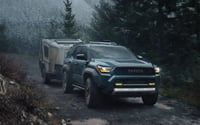
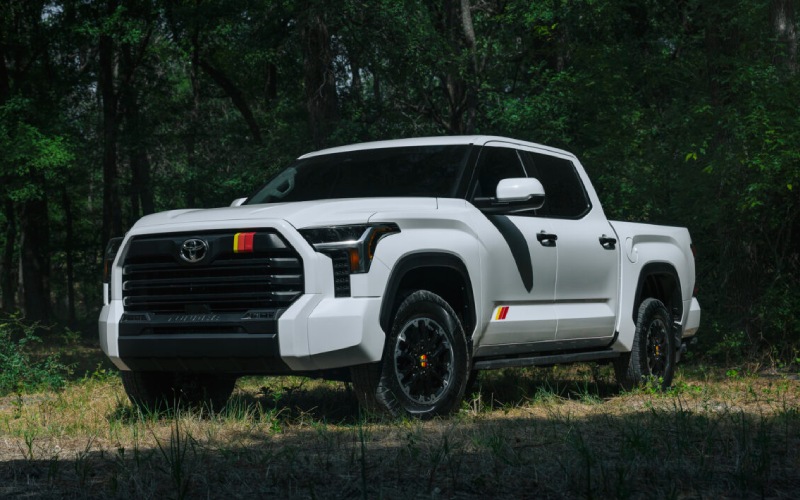
Backing a trailer takes patience, awareness, and a truck that gives the driver clear information at the right moment. For shoppers considering a full-size pickup around Huntsville, AL, the 2026 Toyota Tundra offers available trailering technology designed to reduce guesswork and help make low-speed trailer maneuvering feel more controlled. Toyota’s available Trailer Backup Guide With Straight Path Assist is especially relevant for drivers who tow utility trailers, campers, lawn equipment, small business gear, or recreational equipment through busy neighborhoods, boat ramps, storage lots, and job locations.
This feature matters because trailering challenges often happen at low speeds, not on open roads. Turning into a driveway, lining up a trailer near a garage, backing toward a loading area, or positioning a boat trailer near the water all require precision. Tundra’s available system uses sensors and cameras to help keep a trailer in a straight line as you back up. That does not mean the truck does the thinking for you, but it gives helpful support so you can focus on steering inputs, surroundings, and trailer angle with more confidence.
How Trailer Backup Guide With Straight Path Assist Helps
Trailer Backup Guide With Straight Path Assist is an available driver-assistance technology that supports one of the most stressful parts of towing: reversing with a trailer attached. When a trailer starts to angle in the wrong direction, small steering inputs can quickly become exaggerated. The system is designed to help keep your trailer tracking straighter as you back up, which can make the process feel more predictable.
For Huntsville-area driving, that added predictability can be useful in several common situations. A driver may need to back a trailer into a tighter driveway after work, maneuver around parked vehicles at a jobsite, or line up at a ramp before heading out for a weekend activity. In each case, the goal is smoother positioning with fewer corrections.
- Driveway positioning: Helps when backing a trailer into a residential space where room for correction may be limited.
- Jobsite maneuvering: Supports careful movement around equipment, materials, and other vehicles.
- Storage lot use: Makes it easier to align a trailer in rows or defined spaces.
- Recreational towing: Adds confidence when positioning campers, utility trailers, or boat trailers.
The value of the system becomes even clearer when paired with Tundra’s available Panoramic View Monitor. Toyota notes that the available Panoramic View Monitor uses cameras on the front, sides, and rear of the truck to provide a 360-degree view of what is happening outside. When towing, visibility is a major part of confidence. A large truck and trailer combination can create blind spots, and camera support can help you better understand the space around the vehicle.
Power Still Matters When Towing
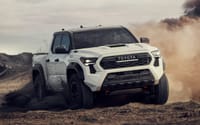
Backing a trailer is only one part of the towing experience. Shoppers also want to know whether the truck has enough strength to pull with confidence. Tundra answers with two capable powertrain options. The i-FORCE twin-turbo V6 engine delivers up to 389 horsepower and 479 lb.-ft. of torque, giving drivers strong gasoline performance and quick acceleration. The available i-FORCE MAX twin-turbo V6 hybrid powertrain raises output to up to 437 horsepower and 583 lb.-ft. of torque, combining a turbocharged gasoline engine with an electric motor for added power.
That torque-rich i-FORCE MAX setup is particularly appealing for drivers who tow more often. Torque helps a truck move a load from a stop, climb grades, and maintain confident response during merging or passing. When properly equipped, the Tundra offers max towing of up to 12,000 lbs., giving it the capability expected from a modern full-size pickup. Of course, shoppers should always match trailer weight, cargo, passengers, and equipment to the specific configuration being considered.
What to Look for During a Tundra Towing Test Drive
A test drive is the best way to understand whether Tundra’s technology feels natural for your towing routine. Even if you cannot tow during the drive, you can still review the controls, camera views, mirrors, screen layout, and driver information displays. The available 14-in. Toyota Audio Multimedia touchscreen is especially helpful because the larger interface can make camera and vehicle information easier to view.
- Ask about trailer support features: Review Trailer Backup Guide With Straight Path Assist, available Panoramic View Monitor, TOW/HAUL modes, and Integrated Trailer Brake Controller (ITBC) availability.
- Check screen visibility: Sit in the driver’s seat and see how easily you can view camera information and vehicle settings.
- Practice low-speed control: Pay attention to steering feel, braking smoothness, and how the truck responds in parking-lot maneuvers.
- Compare powertrains: Drive i-FORCE and available i-FORCE MAX if possible so you can feel the torque difference.
- Review bed and cab configurations: Consider whether your lifestyle calls for more cargo length, more cabin comfort, or a balance of both.
Drivers in Decatur, Huntsville, and Owens Cross Roads, AL, often need a truck that can handle a mix of work routes, family travel, and weekend towing. That is where Tundra’s balanced design becomes important. The multi-link rear suspension with coil springs supports ride comfort, towing stability, and handling dynamics, helping the truck feel composed when empty and more controlled when working.
Why the Bed and Cabin Matter for Towing Shoppers
A capable towing truck should also be useful before and after the trailer is connected. Tundra’s standard aluminum-reinforced composite bed is designed to help shield against dents, impacts, dings, and rust. Available 5.5-ft., 6.5-ft., and 8.1-ft. bed lengths give shoppers flexibility depending on cargo needs. If you regularly carry tools, coolers, tie-downs, work supplies, or outdoor gear in addition to towing, bed durability becomes a meaningful ownership advantage.
Inside, available technology helps Tundra feel current and convenient. The available 12.3-in. digital gauge cluster can provide access to safety and convenience features, navigation, audio controls, off-road features, towing functions, and more. For shoppers who tow regularly, having key information organized in front of the driver can make the experience feel more intuitive.
Frequently Asked Questions:
Does Trailer Backup Guide With Straight Path Assist come standard on every Tundra?
It is an available feature, so shoppers should confirm equipment by grade and configuration. If trailer maneuvering is a priority, ask specifically for a Tundra equipped with this technology.
Can the available Panoramic View Monitor help while towing?
Yes, it can be very useful at low speeds. The available Panoramic View Monitor uses front, side, and rear cameras to provide a 360-degree view around the truck, which can help when positioning the vehicle and trailer.
Which powertrain is better for frequent towing?
Both Tundra powertrains are strong, but the available i-FORCE MAX twin-turbo V6 hybrid powertrain offers up to 583 lb.-ft. of torque, making it especially appealing for drivers who value strong pull and responsive acceleration.
Should I test drive Tundra before choosing a towing configuration?
Yes. A test drive helps you evaluate visibility, seating comfort, screen layout, steering response, braking feel, and powertrain character. High Country Toyota can help you compare features and configurations based on how you plan to tow.
For in-market shoppers, the takeaway is straightforward: Tundra’s available trailer technology is designed to make towing feel more manageable, especially when backing up. Combine that with strong powertrain options, a durable composite bed, available advanced displays, and a comfort-focused suspension, and the truck becomes a smart choice for drivers who want capability without unnecessary complication.